Phishing and Scams
Types of Phishing and Scams
Scammers will use many different methods to try and trick you into giving them important information. Click one of the topics below to learn more about phishing techniques, common scams, and additional advice to help keep yourself safe!

Phishing is a form of social engineering delivered by email. Phishing scams appear to originate from a trusted source to trick you into entering your credentials, revealing personal identifying information (PII), or sending money to them.
The attacker can then use this information to access your accounts, gather additional private information about you in an attempt to steal your identity, and make purchases or apply for credit in your name.
You can learn more about phishing and social engineering by reading the information here.
More information about preventing and recognizing phishing scams can be found here.
Note that 麻豆精选will NEVER ask for your password through email.
For more advice on how to avoid phishing scams, visit our Fight the Phish page!
Have I Been The Victim Of A Phishing Scam?
If you believe that you have been the victim of a phishing scam, and report it to phish@kent.edu or submit a support ticket. Also, don't forget to check out our account security article for tips on how to keep your accounts safe. If you are using Gmail, you can also end all other active sessions. This should stop any unauthorized access to your account. Instructions on can be found here. You can also by following the instructions here.
When a victim of a phishing scam, it's common practice for the hackers to change your signatures, forwards, filters, and other settings. If you believe you fell victim to a scam, we recommend checking the following settings in your mail client.
- A signature for an email is text that is automatically inserted at the end of an email. It is usually something you choose to set up. Make sure it is not an unfamiliar one setup.
- Forwards can be set up to automatically forward to another email address. Make sure it is not forwarded to unknown address without your permission.
- Inbox rules/filters can be used to automatically sort or delete anything in your inbox or sent box etc. Scammers can use it to re-direct/hide their messages. by following the instructions here.
- Check all of the folders in your email account - sometimes the malicious actor may create new folder to store messages they sent/receive or put them into the Trash when using your account to perform scams.
(Click to enlarge)
What Are Scams?
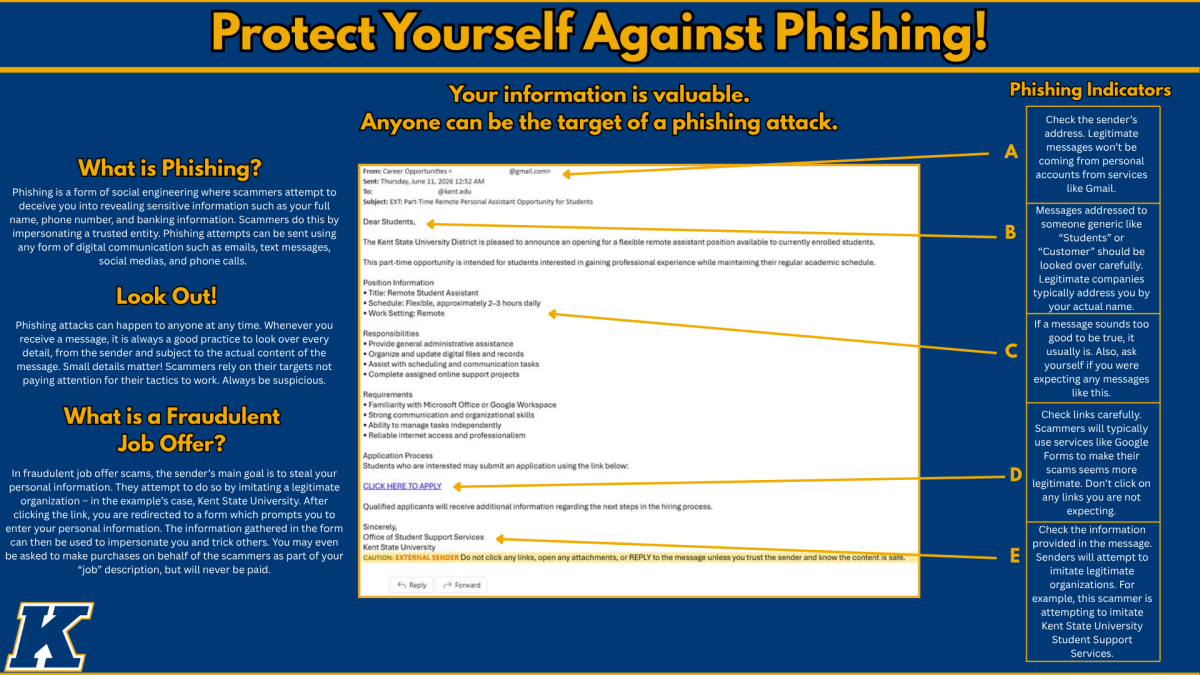
Scams come in many forms and are a type of social engineering to either gain your personal identifiable information (PII), or steal your money. They are getting more and more sophisticated, particularly when it comes to targeting you online and through mobile devices. It鈥檚 important to know how to recognize a scam so you can protect yourself from fraudsters.
Note that KSU will NEVER ask for your password through e-mail, so be wary of anything that says otherwise.
Please report any scams you receive to phish@kent.edu. You can learn about additional ways to report phishing scams here: Report Phishing
How To Detect a Scam?
- Scammers pretend to be from organizations you know
- They pretend that you won a prize or that there is a problem
- Scam calls will usually pressure you to act immediately
- If it sounds too good to be true, then it probably is
- Scammers will tell you to pay in a specific way
Steps To Avoid Scams
- Don鈥檛 give out any personal information
- Beware messages that create a sense of urgency
- Be cautious with messages that pressure you into taking action
- Block unwanted calls or messages
- Don't click on any pictures, links, or white spaces in a suspicious email
- Stop and talk to someone before taking action or giving out any information
Please refer to the site to read more about common scams and how to report them.
In this type of scam, scammers send deceptive emails that appear to be legitimate transaction confirmations from legitimate companies. In scams that target Kent State, the most commonly impersonated company on an invoice tends to be Geek Squad. However, any legitimate business can be impersonated in this scam. These emails typically include details about an immediate subscription renewal or an order that you have no knowledge of.
(Click to enlarge)
Scammers use fake invoice numbers, renewal dates, and other order details to make the email appear genuine. They also use similar logos and promotional banners to make the email look legitimate, ensuring their target believes them. Furthermore, the scammers will include a fake customer support number that they control and tell recipients to call it if they need assistance with their order.
File sharing phishing emails are very common. This scam utilizes services such as Google Drive or Microsoft OneDrive to share a file with you. This file will have an important-sounding name, often involving payroll or employee benefits. The scammer will also use an account with an email address that resembles one used by the university's payroll team, HR department, and other administrative offices. The goal is to get you to click the link and open the file, then complete the tasks within. Read on to learn what these phishing emails look like, what is contained within the shared file, and how to avoid falling prey to one of these attacks!
(Click to enlarge)